The Cardboard Shelf
← Categories

Puzzle Storage

Folders, boards, roll-up mats, and sorting trays that keep finished and in-progress jigsaw puzzles together — without the flimsy boxes taking over the shelf.

Top picks
jigthings JIGSORT 1000 - Jigsaw Puzzle case for up to 1,000 Pieces from
Zip-Up Puzzle Saver Case (up to 1,000 pieces)
A rigid zippered case with stacking sort trays that holds an in-progress puzzle so you can pack it away and pick up where you left off.
View on Amazon →
Affiliate link — as an Amazon Associate we earn from qualifying purchases, at no extra cost to you.
Becko US 8 Puzzle Sorting Trays with Clear Lid, Puzzle Sorters for Storage
Stackable Puzzle Sorting Trays (set of 8, with lid)
Eight stacking trays with a clear lid that keep pieces sorted by color or edge while you work, then nest into a tidy tower between sessions.
View on Amazon →
Affiliate link — as an Amazon Associate we earn from qualifying purchases, at no extra cost to you.
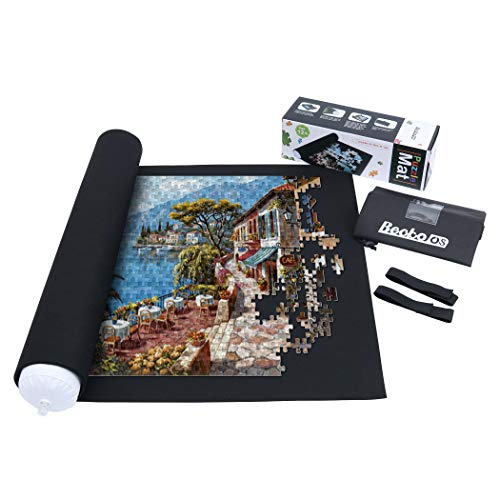
Becko US 1500 Piece Jigsaw Puzzle Mat Roll Up with Drawstring Storage Bag
Roll-Up Puzzle Mat (felt, with inflatable tube)
Build on the felt mat, then roll the whole puzzle around the inflatable tube to clear the table without losing your progress.
View on Amazon →
Affiliate link — as an Amazon Associate we earn from qualifying purchases, at no extra cost to you.
Tektalk Jigsaw Puzzle Table with Integrated Adjustable Stand/Bracket and Removable Cover, 3-Tilting-Angle Wooden Plateau Portable Puzzle Board with 4 Sorting Drawers, for Up to 1000 Pieces
Portable Wooden Puzzle Board with Cover and Drawers
A rigid wooden work surface with sorting drawers and a removable cover, so an unfinished puzzle can move off the dining table in one lift.
View on Amazon →
Affiliate link — as an Amazon Associate we earn from qualifying purchases, at no extra cost to you.

Puzzles pile up the way games do

If you store board games, you probably store puzzles too — and they bring the same headache in a different shape. Original puzzle boxes are flimsy, don't stack well, and eat shelf space fast; 'the boxes are taking over' is the single most common complaint you'll hear from anyone with a growing puzzle stash. The fix splits cleanly into two questions: where finished and in-progress puzzles go, and how to shrink the boxes without losing pieces.

Two separate storage jobs

Puzzle storage really solves two different problems, and the right product depends on which one you have.

  • Storing a puzzle in progress — a board or mat you can cover or roll up and set aside between sessions without scattering your work.
  • Storing puzzles you're not building — folders, cases, or bagged boxes that keep the pieces together and shelve compactly.
  • Sorting pieces while you work — trays that hold edges and colors so the table doesn't become one giant pile.

Flat, upright, or out of the box

For puzzles you're keeping, flat storage in the original box is safest when the pieces are loose, since nothing shifts hard against one wall of the box. Upright storage saves far more space and works well once pieces are bagged inside — a favorite trick among serious puzzlers for shelving puzzles like books. Storing without the box at all, in a zipper pouch with the cut-out lid art, saves the most room of all, though some collectors would rather keep their boxes intact.

Keep the environment kind

Puzzle pieces are cardboard, so they warp, swell, and curl in the same conditions that ruin games — humidity, heat swings, and damp basements or attics. For puzzles you want to keep for years, store them in a stable interior room rather than the garage, seal them against damp, and keep pouches or boxes off the floor. The same climate rules that protect a board game collection protect a puzzle one.

Frequently asked questions

What is the easiest way to store puzzles?

For puzzles you're keeping, bag the pieces and store the puzzle upright like a book — either in the original box or in a labeled zipper pouch with the cut-out box art. It saves far more space than stacking flimsy boxes flat, and bagged pieces don't shift and crush the box. For a puzzle in progress, a board or roll-up mat lets you set it aside between sessions.

Is it better to store puzzles flat or upright?

Flat in the original box is safest when the pieces are loose, since nothing slides hard against one side. Upright storage saves much more shelf space and is perfectly fine once the pieces are sealed in a bag inside — which is why bagging pieces then shelving vertically is such a popular space-saver.

Read next