Unpainted minis have different needs
Storing unpainted figures is easier than painted ones — there's no paint to protect — but the challenge is organization, not abrasion. A growing pile of assembled minis, loose bits, spare sprues, and half-built kits turns into a drawer you dread opening. The goal here is to sort by what you'll actually reach for: ready-to-paint models, in-progress builds, and the bits box you raid for conversions. This is exactly where foam earns its keep — the paint-rub problem that pushes finished models toward magnets doesn't exist yet.

Foam and original sprues are your friends here
For unpainted and work-in-progress models, use the packaging the hobby already gives you. Keep models on their original sprues until you're ready to build them — they're protected, sorted by kit, and take up little room. For assembled-but-unpainted figures, an old foam case makes a fine home; many hobbyists literally keep a beat-up foam tray as the 'jail' for backburner and WIP models, the stuff that isn't precious enough for the good storage but shouldn't rattle around loose. No paint means no downside to foam contact.
Sort by stage, not just by faction
What makes unpainted storage usable is splitting it by where each piece is in the pipeline.
- Assembled and primed: ready to paint — keep these accessible and protected from snapping.
- Built but unprimed, or part-built: your active projects, kept together so you don't lose pieces.
- Loose bits and spares: the kitbash box — heads, weapons, accessories, sorted in small compartments.
- Sealed sprues and kits: the backlog, which can go in deeper storage since you won't touch it soon.
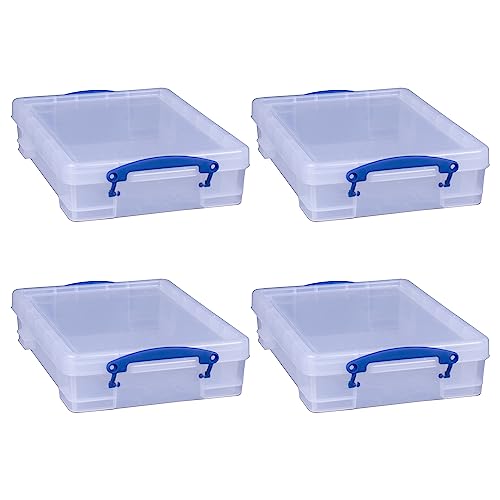
Adjustable boxes do the heavy lifting
An adjustable-divider organizer box is the workhorse for unpainted minis and bits. Movable compartments let you size sections to sprue chunks, small parts, and assembled figures, and resize them as the collection shifts. For loose bits especially, divided boxes turn a tangled pile into a sorted tray where you can actually find a spare arm. Clear stackable boxes keep larger assembled minis visible and dust-free, and if you'll later store the painted versions magnetically, you can magnetize the bases now while the models are still bare.
Protect assembled minis from snapping
Even unpainted, assembled minis have fragile parts — thin weapons, antennae, and delicate joins that snap if they rattle loose. Keep assembled figures from knocking into each other: a divider box or foam tray gives each some isolation. Sprues and unbuilt kits are tougher and can pack tighter without worry. If you plan to varnish, note that sealing is a step for after painting — bare plastic doesn't need it, so save the varnish for the finished models.

Set bases up now for later
Bare, unpainted models are the easiest time to do the fiddly base work you'll want later. If you already know you'll store the painted versions magnetically, drill and glue the base magnets while the model is still primer-bare and easy to handle — it's far less nerve-wracking than working around a finished paint job. The same goes for pinning fragile parts and cleaning mold lines. Doing it at the unpainted stage means that when a model comes off the paint station it's ready to drop straight onto a storage sheet, no extra handling of the finished figure.
Keep a backlog system
Unbuilt kits — the famous 'pile of shame' — are the easiest to store and the easiest to lose track of. Keep sealed sprues and boxed kits together in deeper or higher storage since you won't reach for them often, but keep a simple list of what's in the backlog so you actually build it instead of re-buying. Rotate a kit forward into your active project boxes when you're ready to work on it, and move finished, painted models out to your magnetic storage or display so the WIP boxes don't silently fill up.