Why this is a genuine debate
Every other storage question has a tidy answer. This one doesn't, and anyone who tells you it does is skipping the part that matters. Ditching the boxes and decanting your games into pouches or bins can shrink a collection dramatically — but it also throws away things a lot of people value, and there's no way to have both. So instead of pretending one side is obviously right, here's the honest case each way, the middle paths most people actually land on, and how to do the full decant properly if you decide it's for you.
The case for ditching boxes
The pro-decant argument comes down to one fact: board game boxes are mostly air. A big box is sized to look impressive on a store shelf, not to store its contents efficiently, and once you pull out the components you often find they'd fit in a fraction of the space. Move a shelf of games into zip pouches or a shared bin and a collection that filled a whole bookcase can collapse into a single drawer.
- Space, dramatically. This is the whole reason people do it — decanting can cut the physical footprint of a collection by more than half.
- Apartment and small-space living. When floor and shelf space is the hard constraint, boxes are a luxury you may not be able to afford.
- Faster setup. Components sorted into labeled pouches or trays can be quicker to get to the table than digging through a loose box.

The case against
The other side is just as real, and it's not only sentiment. The box protects resale value: a game with its original box, insert, and rulebook sells for meaningfully more than a bag of loose parts, and to some buyers a boxless game is close to worthless. For a lot of collectors the box is also the collection — the art is the point, the spine is what you see on the shelf, and a wall of covers is part of why they display games at all. There's a practical risk too. A box keeps a game's pieces together and identifiable; once components live in generic pouches and bins, it's easier to lose track of what belongs to what, mix up similar pieces, and misplace the one token that makes the game playable. Ditching boxes trades protection and identity for space, and whether that's a good trade depends entirely on what you value.

The middle paths most people actually take
The good news is that it's not all-or-nothing, and the compromises are where most sensible collections end up. You can keep the boxes and still get most of the space back, and you can decant selectively instead of gutting everything.
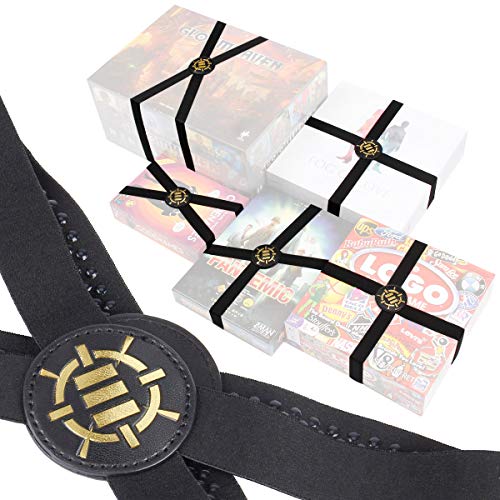
- Keep boxes but band them shut. A big space and shelf-integrity win comes from simply keeping lids from sliding off. Elastic box bands hold a lid tight so you can stand boxes on their sides or stack them densely without the top sliding open — you keep the box, the art, and the resale value, and just store it more efficiently.
- Decant components, keep the box flat. Move the fiddly parts into organizers for faster setup, then break the box down flat or store it out of the way. You get the setup speed and most of the space, and you still have the box if you ever sell.
- Card games into card boxes. Deckbuilders and card-heavy games are the easiest win: sleeve the cards and move them into dedicated card storage boxes with dividers, and a shelf of card-game boxes becomes a couple of tidy long boxes.

How to do a full decant properly
If you decide to commit and go boxless, doing it carelessly is how you end up with an unplayable pile of mystery bags. A few habits keep a decanted collection usable.
- Label everything. Every pouch and every bin gets the game's name on it, clearly. Unlabeled bags are how components migrate and games become unplayable.
- Keep the rulebook with the components. Don't separate them — a rulebook stored elsewhere is a rulebook you'll never find at game time. Fold it in with the pieces or store it in the same pouch.
- Photograph the box before you recycle it. A quick photo of the front, back, and any component list preserves the setup reference and the art, and it costs you nothing.
- Never throw away punchboards and inserts you might need. Some components are only stable in their original tray, and some games are genuinely hard to sort without the punchboard frame — keep what actually protects the pieces.
So which should you do
Match the choice to your situation instead of your ideals. If space is a real constraint and you have no plans to sell, decanting or banding boxes flat is the obvious win, and card games should be moved to card boxes regardless of what you do with everything else. If you display your collection, care about resale, or just love the boxes, keep them and reclaim space with bands and denser shelving instead. And there's no rule that says you have to treat the whole collection the same way — decant the card games and the space hogs, keep the boxes on the ones with art you love, and band the rest shut. The right answer is the one that fits the space you have and the value you'd hate to lose.