Get the depth right before anything else
Almost every storage regret hobbyists report comes down to one number: shelf depth. A standard board game box is roughly 11.5 to 12 inches square, which is deeper than an ordinary bookshelf, so a too-shallow shelf leaves boxes overhanging the front edge. Aim for at least 12 inches of usable depth, with 14 to 16 inches preferred if you own big-box or campaign games. This single spec, not the brand on the box, is why deep-cube shelving like IKEA Kallax became the hobby default — its cubes run about 13 inches deep with an open back, so a deep box slides all the way in. Measure your largest box first and buy shelving that clears it; a shelf you have to fight is a shelf you will replace.

Flat vs. upright: the rule that protects your boxes
Store boxes flat unless the insert locks components in place. Stood on end, an un-inserted box dumps everything against one side, bows the lid, and slowly bends the board. If a game has a fitted insert or tightly packed trays that hold components against the lid, upright storage is fine and saves shelf space. The community consensus is that most box damage comes from stacking weight, not orientation — a tall pile crushes the box at the bottom no matter which way it sits. Keep heavy boxes off the bottom of any deep vertical stack, and store the ones you play most where you can reach them without unburying a pile.

Common box sizes to plan around
Knowing the rough footprints helps you buy shelving once instead of twice.
- Standard square box: ~11.5 x 11.5 in (Ticket to Ride, Catan) — the size most shelving is built around.
- Large square / deluxe: ~12 x 12 in and taller (Gloomhaven, many Kickstarter editions) — check height clearance.
- Ticket-to-Ride / long box: ~11.5 x 7.5 in — fits two-deep in a cube.
- Small box / filler: card-game sized — group several together so they don't get lost on a deep shelf.
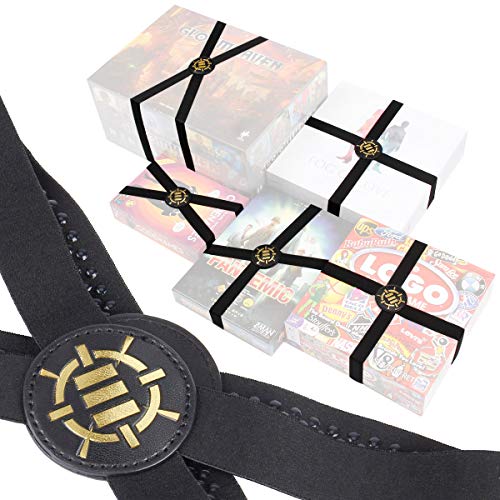
Moisture is the number-one long-term enemy
If your games ever leave a climate-controlled room, humidity will do more damage than anything else. It warps boards, swells boxes, and clouds sleeves, and it does the harm slowly enough that you don't notice until it's done. For any long-term hold in a basement, garage, or storage unit, hobbyists overwhelmingly recommend dropping a silica gel or desiccant packet into every box or bin — it's the cheapest and most-repeated protection tip there is. Don't store cardboard game boxes inside cardboard moving boxes in an uncontrolled space, because that combination invites mold; use sealed plastic totes such as Sterilite bins instead, which also block pests and stray water. Keep a plastic-tub bottom layer between your games and a floor that could flood.

Air gap, shade, and stable temperature
Two smaller climate rules prevent most of the rest. Don't push shelving flat against an exterior or cold wall — the trapped, cooler air behind the boxes encourages mold, a problem UK, Canadian, and Australian hobbyists raise constantly. Leave a small air gap, and if a closet full of games runs damp, a compact dehumidifier earns its keep. Keep boxes out of direct sunlight, too: UV fades box art and weakens cardboard, which is one reason many people prefer closed cabinets or cupboards for display. A stable interior room beats a garage, basement, or sunny window every time, and wide temperature swings are as damaging as raw humidity.
Storage mistakes that ruin games
Most damage comes from a handful of avoidable habits.
- Stacking heavy boxes on light ones until the bottom lids cave in.
- Storing un-inserted boxes upright so the board slowly bows.
- Leaving games in a humid garage, against a cold wall, or in a sun-facing window.
- Storing cardboard boxes inside cardboard moving boxes, where mold takes hold.
- Packing the shelf so tight you have to wrestle boxes out, tearing corners.