The Cardboard Shelf
← Guides

Board Game Storage: Horizontal vs. Vertical?

The endless debate, settled: when to store games flat, when to stand them upright, and how to do each without wrecking components.

The short answer

Vertical storage — boxes standing on their spines like books — is the better default for most collections, and it's the louder camp in every discussion of the topic. It uses shelf height efficiently, lets you pull any game without unburying a stack, and, counter to intuition, stresses boxes less than stacking them, because the real damage comes from weight pressing down, not from orientation. People who switch from flat stacks to spine-out routinely report their boxes ending up in noticeably better shape. The one real catch is that upright storage demands organized components. Horizontal (flat) storage is the safer choice for specific exceptions: oversized boxes, games with heavy unsecured bits, and damaged or bulging boxes.

CAPHAUS Sturdy Room 13-Inch Cube Storage Organizer Shelf, with Extra Thick Exterior Edge, Open Storage Shelf Divider, Bookcase, 6-Cube / 8-Cube / 9-Cube, Colors Available in Rustic Grey Oak and White
Deep Cube Storage Shelf (board-game-box depth)
Open-cube shelving with ~13" cubes so most standard game boxes fit upright or flat.
View on Amazon →
Affiliate link — as an Amazon Associate we earn from qualifying purchases, at no extra cost to you.

When vertical wins

Standing boxes upright is the right call for the bulk of a collection.

  • Standard-size boxes with organized or tightly packed components — they stand fine and stay readable.
  • Games with good inserts (Isle of Cats, Wingspan, Century: Spice Road) — nothing shifts when they're on end.
  • Medium and large collections — vertical uses full shelf height, fitting far more games.
  • Display shelving — spines out reads as tidy and lets you browse the collection at a glance.
Plano 2-3700-01 2" Clear Adjustable Divider Stowaway® Organizer
Stackable Component Organizer Box (adjustable dividers)
Plano-style tackle boxes with movable dividers — the cheap, universal fix for loose tokens and cards.
View on Amazon →
Affiliate link — as an Amazon Associate we earn from qualifying purchases, at no extra cost to you.

When horizontal is safer

Flat storage still has its place for the exceptions.

  • Games with loose trays or lots of small bits (Great Western Trail, Survive: Escape from Atlantis) that would dump to one side standing up.
  • Big-box and oversized games that don't fit a shelf upright without overhanging.
  • Boxes that are bulging, damaged, or have weak lids that won't bear a neighbor's weight.
  • The top few of a stack only — never deep stacks, which crush the bottom boxes.
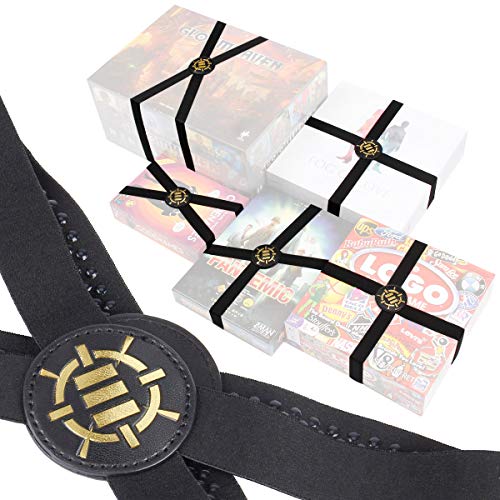
ENHANCE Board Game Bands - Elastic Box Bands with Durable Textured Grip to Keep Lids Closed on Board Boxes, Tabletop/Card Games Without Rubbing During Travel & Storage (Set of 5)
Board Game Box Bands (elastic, set of 5)
Textured elastic bands that hold game lids shut for shelving and travel, without the sticky mess old rubber bands leave behind.
View on Amazon →
Affiliate link — as an Amazon Associate we earn from qualifying purchases, at no extra cost to you.

Box creep, and how to stop it

The main knock on vertical storage is box creep: lids that slowly lift and components that shift toward the bottom edge. It's real, but hobbyists agree it's largely solved. The most-recommended fix is a box band — an elastic or silicone rubber band stretched around the box (silicone lasts, since plain rubber degrades over time) to hold the lid shut in transport and on the shelf. Beyond bands, the standard tricks are to bag components in ziplocs, use an insert that comes flush to the lid, keep the empty punchboard frames and lay them on top to fill the gap, pack heavier components toward the side that becomes the bottom, and store games snugly so neighboring boxes hold each other's lids closed.

Golden State Art 20x30 White Foam Board 3/16 Thick 10 Pack
Foam Board Sheets (DIY insert material, 20x30, 3/16")
A bulk pack of acid-free white foam core sheets — the raw material for cutting your own custom trays and box inserts.
View on Amazon →
Affiliate link — as an Amazon Associate we earn from qualifying purchases, at no extra cost to you.

Orientation is per-game, not per-collection

The nuance most people settle on is that orientation should be decided game by game. Titles with great inserts or tightly packed trays store vertically with zero issues; titles with loose lidded trays or a pile of small tokens spill if tipped and are better off flat. There's no rule that a whole shelf has to match — plenty of people run a deliberate mix, standing the well-organized games and laying the messy ones flat, and that's the sensible outcome rather than a compromise.

The real enemy is stacking, not standing

The strongest argument against flat storage, repeated over and over, is that a tall stack dishes and dents the box on the bottom — worse when the stacked boxes are mismatched sizes, so the weight lands on the weak center of a lid rather than its edges. If you do stack, keep piles shallow, three or four boxes at most, and size-matched with the heaviest on the bottom. And once a collection gets big enough, the whole debate goes out the window: 'if it fits, it sits,' and box-Tetris wins.

Frequently asked questions

Is it better to store board games vertically or horizontally?

Vertically (upright on the spine) is the better default for most games — it saves space, makes any game easy to grab, and actually stresses boxes less than stacking, since the damage comes from weight, not orientation. Store flat only for oversized boxes, games with loose unsecured bits, or damaged boxes. The key to vertical is organizing the components first so they don't slide.

How do I stop box lids from popping open when stored upright?

Use a box band — an elastic or silicone rubber band around the box, with silicone preferred because plain rubber degrades. Bagging components, using an insert that sits flush to the lid, laying the empty punchboards on top to fill the gap, and storing games snugly so neighbors hold each other shut all help too.

Will storing board games on their side damage them?

Not if the components are organized. The damage people see — bent cards, scattered tokens — happens when an unsorted box stands on end and loose pieces slide against the lid. With a fitted insert, a divider box, or bagged and padded components, upright storage is safe and often kinder to boxes than stacking.

Is it OK to stack board games flat?

A short stack is fine; deep stacks are the problem. A tall pile dishes and dents the bottom box, especially when the boxes are mismatched sizes and the weight lands on the weak center of a lid. Keep stacks to three or four boxes with the heaviest on the bottom, or stand most of the collection upright to spread the load.

Shop the category
Storage & Shelving

Shelving sized for game boxes and storage boxes for loose components and sleeved decks.

Browse picks →
Read next