The Cardboard Shelf
← Guides

Board Game Storage Mistakes to Avoid

The common storage habits that warp boards, crush boxes, and lose components — and the simple fixes for each.

Stacking boxes flat and deep

The most common mistake is stacking game boxes flat in tall piles. The bottom boxes carry all the weight and slowly crush, lids bow and dish inward, and you have to unbury half the stack to reach the game you want — so you play the buried ones less. It's worse when the boxes are mismatched sizes, because the weight lands on the unsupported center of a lid instead of the strong edges. The fix is to store boxes upright on their spines like books, which spreads the load, protects the boxes, and lets you pull any game without disturbing the rest. If you do stack, keep piles shallow — three or four boxes — and size-matched.

CAPHAUS Sturdy Room 13-Inch Cube Storage Organizer Shelf, with Extra Thick Exterior Edge, Open Storage Shelf Divider, Bookcase, 6-Cube / 8-Cube / 9-Cube, Colors Available in Rustic Grey Oak and White
Deep Cube Storage Shelf (board-game-box depth)
Open-cube shelving with ~13" cubes so most standard game boxes fit upright or flat.
View on Amazon →
Affiliate link — as an Amazon Associate we earn from qualifying purchases, at no extra cost to you.

Buying shelves that are too shallow

Almost every shelving regret traces back to one spec: depth. A shelf that's too shallow leaves boxes overhanging the front edge, where they slump, catch, and eventually tip. Standard game boxes need around 12 inches of depth, and big-box games want 14 to 16. This is the real reason cube shelves became the hobby default — they're one of the few cheap options deep enough — but any sturdy, deep, adjustable shelf works just as well. Measure your deepest boxes before buying anything.

Storing games where the climate swings

Where you store games matters as much as how.

  • Hot attics and garages: heat warps boards and softens plastic and glue over time.
  • Damp basements: humidity curls cards, swells boxes, and invites mildew.
  • Cardboard boxes inside cardboard boxes: the outer carton wicks moisture and can grow mold — use sealed plastic totes instead.
  • Shelves pushed flush against a cold exterior wall: trapped air encourages mold, so leave a gap.
  • Direct sunlight: fades box art and card backs, which can also make cards markable.
Plano 2-3700-01 2" Clear Adjustable Divider Stowaway® Organizer
Stackable Component Organizer Box (adjustable dividers)
Plano-style tackle boxes with movable dividers — the cheap, universal fix for loose tokens and cards.
View on Amazon →
Affiliate link — as an Amazon Associate we earn from qualifying purchases, at no extra cost to you.

Leaving components loose — then standing the box up

Loose components are the quiet killer. Bits rattling around redistribute every time the box moves, cards get bent under shifting tokens, and small pieces migrate into other compartments or out of the box entirely. This bites hardest when you store upright, which is otherwise the right call: stand an unsorted box on its spine and everything slides and crushes against the lid. Do it in the right order — sort the components into bags or an adjustable-divider organizer first, then store the box upright. A box band around games with lids that creep open keeps them shut in the meantime.

Hiding games away so they never get played

Not every storage mistake damages a box — some just kill the collection's use. Games shoved in a closet, buried at the bottom of a stack, or re-homed out of their art-covered boxes drop out of rotation because you never see them to suggest them. Hobbyists repeat it like a law: visible games get played, hidden ones get forgotten. Storing efficiently is good, but not at the cost of never seeing the games you own — keep the ones you actually want to play where you'll notice them.
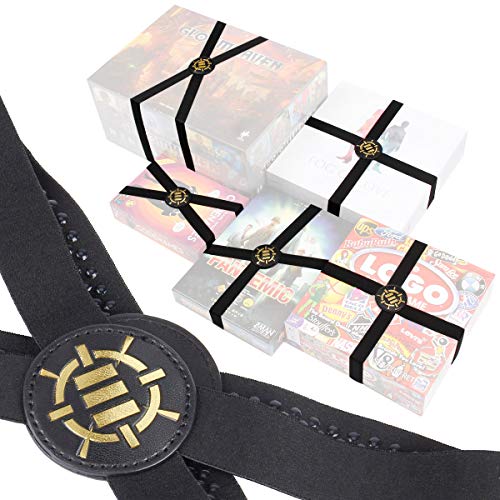
ENHANCE Board Game Bands - Elastic Box Bands with Durable Textured Grip to Keep Lids Closed on Board Boxes, Tabletop/Card Games Without Rubbing During Travel & Storage (Set of 5)
Board Game Box Bands (elastic, set of 5)
Textured elastic bands that hold game lids shut for shelving and travel, without the sticky mess old rubber bands leave behind.
View on Amazon →
Affiliate link — as an Amazon Associate we earn from qualifying purchases, at no extra cost to you.

Overloading cheap shelving

A full collection is heavy, and flimsy particleboard shelving sags or fails under it. Don't load a shelf past its rating, keep the heaviest big-box games on lower shelves, and anchor tall units to the wall — especially in homes with kids, where an open-backed shelf can be climbed. A sturdy shelf sized to standard boxes prevents both the slow sag and the lean that eventually tips boxes over.

Frequently asked questions

What's the worst way to store board games?

Stacking boxes flat in tall, deep piles in a place with temperature and humidity swings, with loose unsorted components inside. That combination crushes boxes, warps boards, curls cards, and loses pieces. Store boxes upright with organized components in a stable, dry, room-temperature spot instead.

Is it bad to store board games in the garage or attic?

Usually yes — garages and attics swing between hot and cold and often hold humidity, which warps boards, softens plastic, and curls cards over time. If you must store games there, use sealed bins with moisture absorbers, but ordinary climate-controlled living space is far safer.

Should board games be stored flat or upright?

Upright on their spines is best — it spreads the weight, protects the boxes, and lets you reach any game easily. The catch is that you must organize the components first (insert, divider box, or bagged), or an upright box just lets everything slide and crush against the lid.

How deep should board game shelves be?

At least 12 inches for standard boxes, and 14 to 16 inches for comfortable big-box fit. Too-shallow shelving is the most common storage regret hobbyists report — boxes overhang the front edge, slump, and tip. Depth matters more than brand, so measure your deepest boxes before buying.

Can I stack board game boxes on top of each other?

You can, but keep stacks shallow — three or four boxes — and size-matched. Tall or mismatched stacks crush the bottom box, and weight landing on the unsupported center of a lid dishes it inward. Storing boxes upright on their spines avoids the problem entirely and lets you grab any game without unstacking.

Shop the category
Storage & Shelving

Shelving sized for game boxes and storage boxes for loose components and sleeved decks.

Browse picks →
Read next