RPGs sprawl more than board games
A tabletop RPG isn't one box — it's rulebooks, a pile of dice, minis or tokens, maps, a screen, and stacks of notes and character sheets. Without a system it spreads across a shelf and a drawer and the floor, and prepping a session means hunting for pieces. The goal is to keep each type of thing in its own home so you can grab a 'go kit' and run a game anywhere.
Store the books like the references they are
Rulebooks are tools you reach for mid-game, so shelve them for access.
- Stand hardcovers upright on a shelf, spines out, grouped by system so the right book is at hand.
- Keep the books you actually reference within reach of the table, not in a closet.
- Use bookends or a snug shelf so heavy hardcovers don't lean and warp over time.
- Store softcovers and adventures upright in a magazine holder so they don't curl.
Corral the dice and small bits
Dice multiply, and loose dice end up everywhere. A dice tray does double duty — it contains rolls during play and gives the dice a home between sessions — and small divider boxes or bags keep sets sorted by color or by player. Tokens, status markers, and minis live best in an adjustable-divider organizer so a session's worth of bits lifts out in one tray rather than being dug out of a bag.

Build a grab-and-go kit
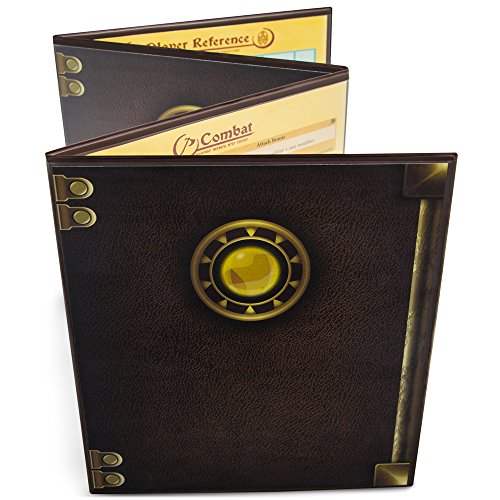
The payoff of organizing is a kit you can pick up and run a game from. Keep the current campaign's essentials together — the screen, the dice you use, the active minis and tokens, and your notes — in one container or bag so prepping a session is grabbing one thing, not assembling five. A customizable GM screen with reference pockets keeps your most-used tables in front of you, and rotates to a new system when the campaign changes.