Customizable beats pre-printed
A GM screen with clear insert pockets works for any system — drop in the references you actually use instead of a fixed game's printed tables. It outlasts any single campaign or edition, and you can swap pages as your group's needs change. Pre-printed screens look nice but lock you into one game's layout and go out of date when rules update.
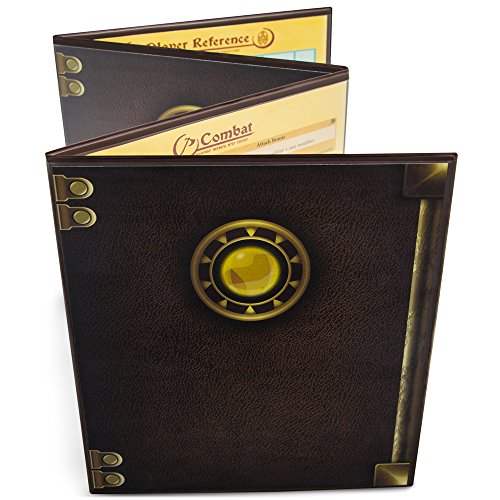
Landscape vs. portrait screens
Screen orientation is a real trade-off worth thinking about.
- Landscape (low and wide): keeps sightlines open so you can see players and the table over the top — most modern GMs prefer it.
- Portrait (tall): hides more and holds more reference panels, but creates a wall that can feel separating at a small table.
- Magnetic / modular panels: let you reconfigure width for the table size and fold flat for transport.
Small comfort upgrades that punch above their price
A handful of cheap accessories quietly remove the little frictions that slow a session. Card stands free up hands and hide your cards from neighbors — genuinely useful for kids, big hands, and tight tables. Per-player trays corral each person's tokens and dice so the table doesn't become a shared mess. None are essential, but at a crowded table they add up.

Where to spend and where to skip
Spend on the things everyone at the table uses every session — a good screen, player trays, a dice tray. Skip single-purpose novelties and anything that doesn't fold or store easily, because table space and storage space are both limited. The best table accessory is the one that sets up fast, packs away small, and works across every game you play.