Why accessories beat games for a gift exchange
A gift exchange is the hardest kind of shopping there is. Whether it's a white elephant, a Secret Santa, or a Yankee swap, you're buying for a mixed group where you often don't know the recipient at all — and even when you draw a name, you rarely know what's already on their shelf. Buying a specific game is a gamble twice over: they might own it, or it might not be their taste. Accessories sidestep both problems. A component upgrade, a set of organizers, or a handy tool works with whatever games a person already plays, so it lands whether it ends up with the group's biggest hobbyist or someone who only breaks out a game at the holidays. That universality is exactly what you want when you're shopping for a table full of people you can't shop for individually.
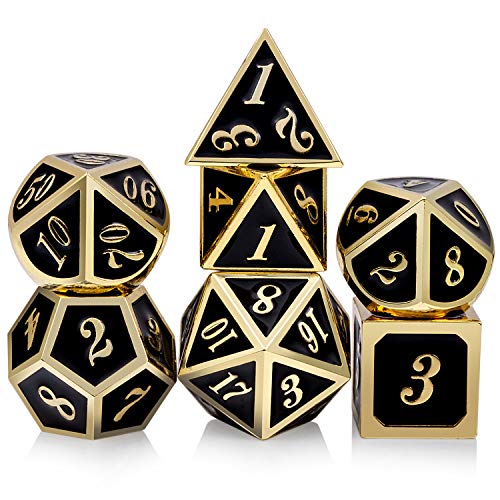
Steal-worthy picks for white elephant
White elephant lives or dies on one thing: is your gift good enough that people want to steal it? The winning gifts are the ones that look and feel nicer than their price, so the whole room notices when it gets unwrapped. A metal polyhedral dice set is the classic steal — it comes in a display-worthy metal box, has real heft when it hits the table, and reads as a genuine treat even to someone who only rolls dice a few times a year. It's the gift that gets locked away in someone's arms for the rest of the round. An automatic card shuffler is the other head-turner: it's a little gadget that does something visible and fun the moment it's demonstrated, and plenty of people have never bought one for themselves. Both punch well above a typical exchange cap, which is exactly what makes them fight-worthy.

Safe picks for the casual player
Not everyone at a gift exchange is a serious gamer, so your pick has to work for someone whose whole collection is a couple of party games and a family classic. The safest accessories are the ones that need no knowledge of what they own. A set of collapsible silicone bowls corrals loose pieces during any game and packs flat afterward, which is useful to literally anyone who has ever hunted for a lost token under the couch. A set of replacement sand timers is another quiet winner — nearly every household has a game whose timer went missing years ago, so a six-pack of assorted durations solves a problem the recipient forgot they had. Neither depends on the recipient being a hobbyist, which is what makes them dependable when you're shopping blind.

For the known hobbyist: Secret Santa with intel
Secret Santa is different from white elephant because you usually draw a specific name, and sometimes you actually know something about the person. If you've drawn the group's real board gamer, you can spend that intel on an upgrade they'll appreciate more than a random gadget. A metal dice set still lands here as a nicer-than-expected treat, but a card shuffler earns its keep with anyone who plays deckbuilders or card-heavy games and shuffles constantly. If you know they host game night, silicone bowls with lids read as a thoughtful, practical pick rather than a gag gift. The rule of thumb: the more you know about the recipient, the more you can lean toward the accessory that fits how they specifically play — but keep it universal enough that you're not betting on one exact title.

What to avoid in a gift exchange
A few things look like clever gamer gifts but quietly depend on information a gift exchange never gives you.
- Game-specific inserts and organizers: they only fit one exact title, so unless you somehow know the recipient owns that game and doesn't already have an insert, they'll miss.
- Card sleeves in the wrong size: sleeves are great gifts, but a pack sized to an unusual card game is useless to everyone else — save specific sleeve sizes for a gift where you can check first.
- Taste-specific games: a heavy strategy game or a niche party game only lands with the right person, and an exchange is the wrong place to gamble on taste.
- Anything that needs a measurement or a count: a box sized to a particular collection, or a shelf, needs details you don't have when shopping for a stranger.
Wrapping and presentation
In a white elephant especially, presentation does half the work, because people bid on what a gift looks like before anyone knows what's inside. A dice set that already comes in a metal box barely needs wrapping — the box is the gift. For smaller items like silicone bowls or a set of sand timers, bundle a couple together so the package has some heft and reads as generous rather than like one small thing rattling in paper. A little box or a gift bag with tissue makes a stack of small accessories feel like a real present. If you want a low-cost extra that fits the theme, tuck in a printed score sheet from our score sheets tool so whoever ends up with the gift has a way to track the first game they play with it.