Store-bought versus DIY
Commercial board-game advent calendars do exist — puzzle-a-day escape-room calendars, dice calendars, and themed accessory boxes all show up around the holidays. They're fun, but they share the same limitations: the contents are fixed, you can't tailor them to the person, and you're paying for the packaging as much as the pieces. A DIY calendar fixes all of that. You choose every one of the 24 items, you scale it to whatever you want to spend, and you can build it around the games the recipient actually plays. It's also reusable in a way a sealed box isn't. This guide is about the DIY route: the formats that work, what to put behind each day, and how to make it a tradition rather than a one-time gift.

Pick a format: pockets, boxes, or bags
The container is the first decision, and it sets the tone for the whole project. A hanging fabric pocket calendar — the kind with 24 numbered slots — is the easiest reusable option, since you refill it each year and it stores flat. Small numbered boxes or tins give you room for bulkier items like a dice set and look great stacked into a little advent village, but they take more storage. Numbered paper bags or drawstring pouches clipped to a string are the cheapest and most flexible, and they hold odd-shaped items a rigid pocket won't. Whatever you choose, the constraint is the same: most days need to hold something small and flat, so plan your filler around the size of the slots before you start buying.
Filler ideas by tier
The trick to a 24-day calendar is mixing a lot of cheap days with a few anchor days, so it feels generous without emptying your wallet. Split your ideas into tiers before you shop.
- Cheap bulk days: a single loose die, a small handful of penny sleeves, a few meeples or cubes, a promo card, or a printed challenge slip. Buying dice and sleeves in bulk means most of your 24 days cost almost nothing each.
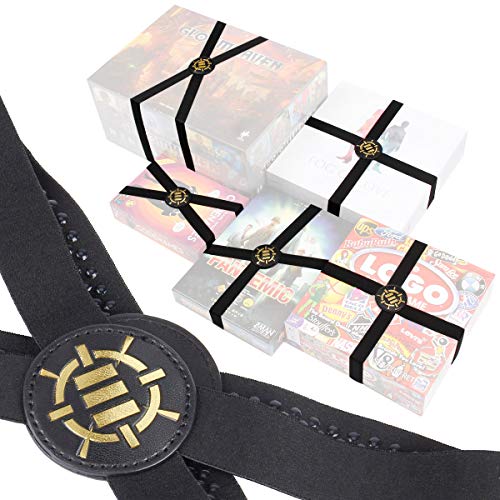
- Mid-tier days: a set of collapsible silicone bowls for taming loose pieces, a pack of box bands to keep game lids shut on the shelf, or a small expansion or mini expansion for a game they own.
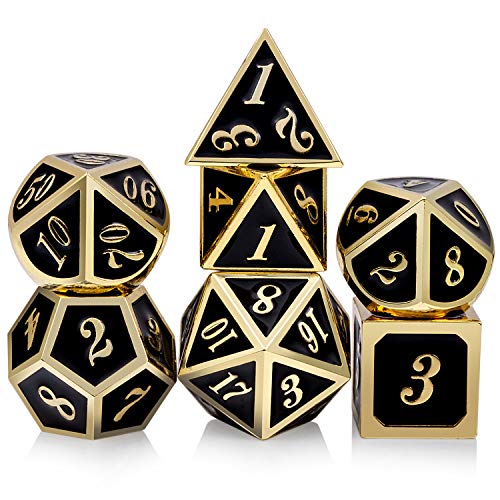
- Anchor days: save a couple of standout items for the big dates — a metal dice set in its own box is a natural pick for the final day or a milestone like the halfway point.
- Free days: game-night coupons ('tonight we play the loser's pick'), a printed challenge, or a print-and-play mini game cost nothing and often become the favorite days.

Family versus partner versions
Who the calendar is for changes what goes in it. A family calendar leans toward shared items and activities everyone opens together — a daily game challenge, a snack, a component that improves family game night, and coupons redeemable as a group. Keep the individual items cheap and cheerful, since the fun is in the daily ritual rather than any single gift. A partner or couples calendar can be smaller and a little nicer, since you're filling 24 days for one person: sprinkle in the accessories they'd actually use with the games you play together, a few coupons for a date-night game session, and one or two anchor upgrades spaced through the month. In both cases the calendar works best when the days build toward something rather than being 24 interchangeable trinkets.
The activity-calendar variant
If you'd rather not buy 24 physical gifts, flip the concept: make it a calendar of daily game challenges instead of things. Behind each day is a slip with a prompt — play a game you haven't touched in a year, teach someone a new game, play a co-op on the hardest difficulty, run a house-rules night, or let the person who lost yesterday pick tonight's game. This version costs almost nothing, works for a household or a couple, and turns the whole month into a game-night streak rather than a pile of small objects. You can mix the two approaches, too: mostly activity slips with a few physical accessories tucked behind the bigger dates. Our print-and-play section is a good source of quick games to slot in as challenge days.
Make it reusable next year
One of the quiet advantages of a DIY calendar is that the structure outlives the contents. A fabric pocket calendar or a set of numbered boxes becomes a fixture you refill every year, so the only recurring cost is the filler. Box bands are worth calling out here — they keep game lids shut for shelving and travel and make a genuinely useful daily item, and they double as a way to bundle and store the calendar's own boxes in the off-season. Keep a running list of what worked and what fell flat each year, and hold onto any leftover bulk dice or sleeves to seed next year's cheap days. Built once, the calendar turns into an annual tradition that costs a little less and gets a little better every time you set it up.